THE TWO BRONZE DOORS OF THE TROIA CATHEDRAL
THE MAJOR GATE
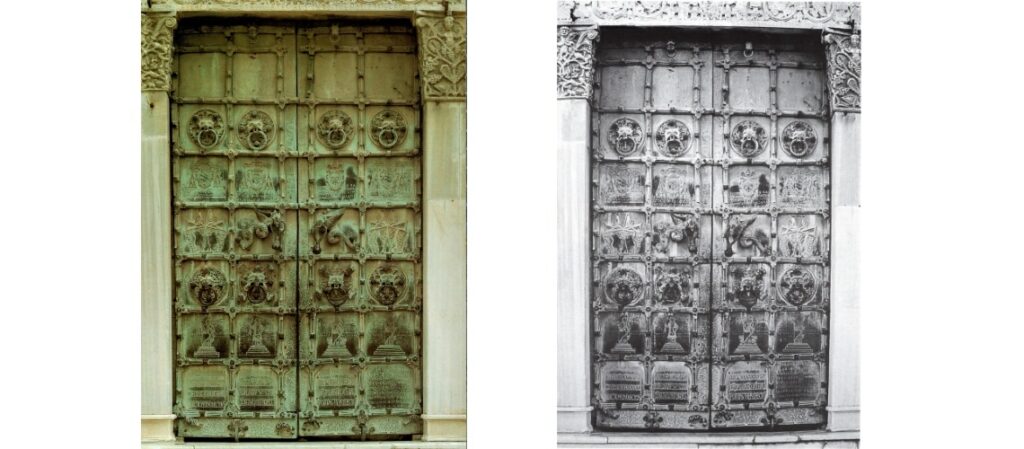
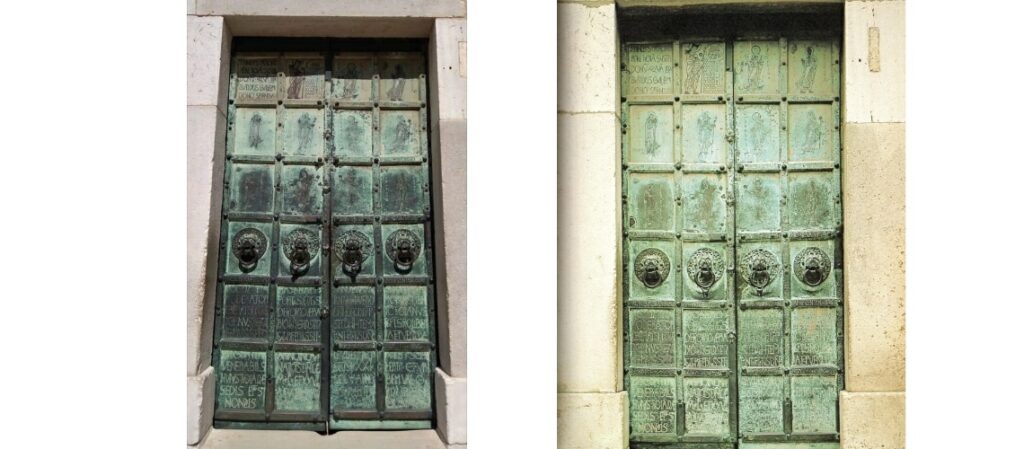
Construction of the city’s new cathedral began in 1093, modifying and expanding the previous church of Santa Maria; by 1119, the church was completed and already had its important bronze Porta Maggiore, thanks also to the interest of Bishop William II, whose name appears in the inscription on the door itself. The sculptor and founder was Oderisio da Benevento, who also created the one for Benevento Cathedral. [Photos 1, 2]
|
1 |
2 |
We are witnessing a transition from the technique of bronze Byzantine doors to that of Western doors: Byzantine is the system of two wooden panels (each measuring 3.66 m and 1.1 m) covered with 28 bronze panels and 20 rectangular panels that form the border on three sides; they are all held together by a grid of eight horizontal and six vertical bars in the shape of knotted sticks, secured at the intersections by studs in the shape of four-petalled flowers.
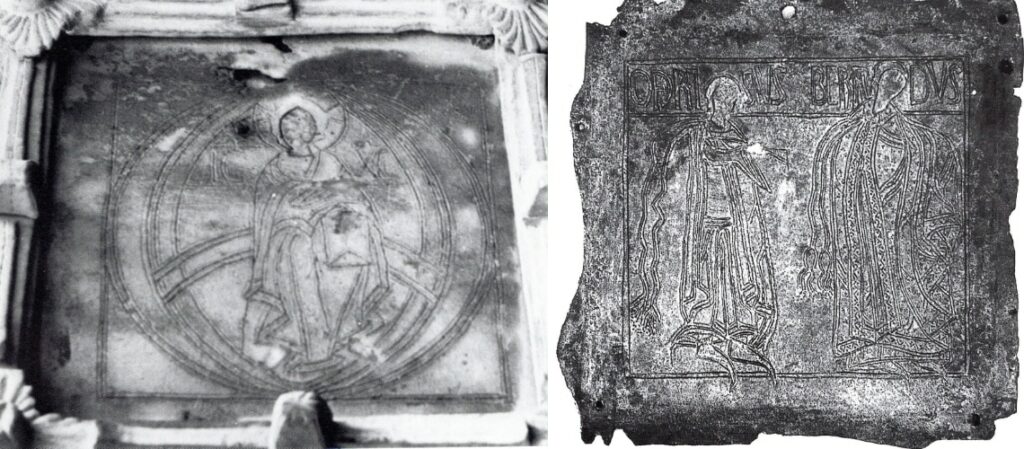
There are registers of inlaid panels (the first upper register and the second-to-last at the bottom), but the design and inlaid technique is entirely Western: at the top are St. Peter and St. Paul, Christ in the mandorla, Bishop William II, Berard and Oderisius, all crudely imitating Byzantine inlaid work. [Photos 3, 4, 5]
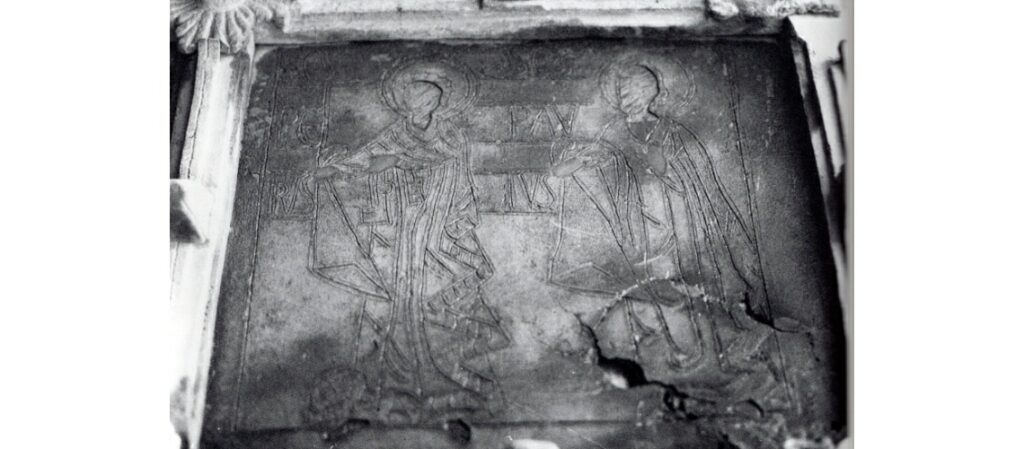
3 – S. Peter and S. Paul
|
4 – Christ in the almond |
5 – Oderisio and Berardo |
The third register also had similar inlaid decorations, but were replaced in 1691 with the coats of arms of Antonio di Sangro, Bishop of Troia, Cardinal Scipione Rebiba, and his nephew Prospero Rebiba.
Those in the penultimate register were replaced in 1573 with others featuring engravings of Saints Secundus, Anastasius, Pontianus, and Eleutherius, all placed on stepped bases. [Photo 6]
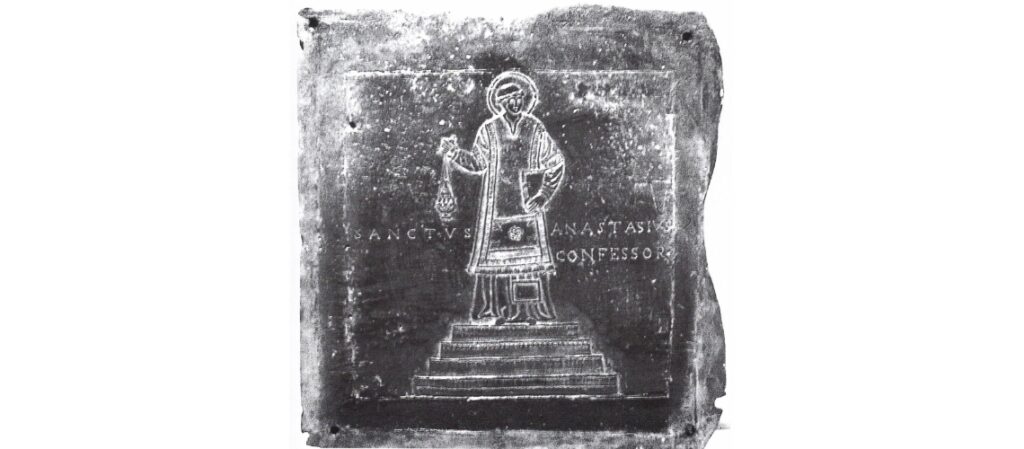
6 – S. Anastasio
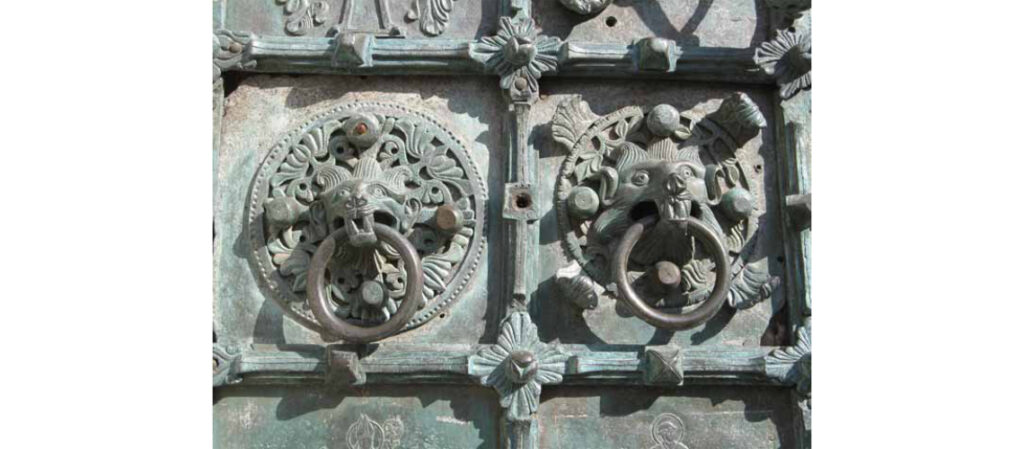
The second and fifth registers are occupied by openwork discs from which emerge high-relief heads of lions holding rings of great plastic strength, cast using the lost-wax method. [Photos 7,8,9,10,11,12]
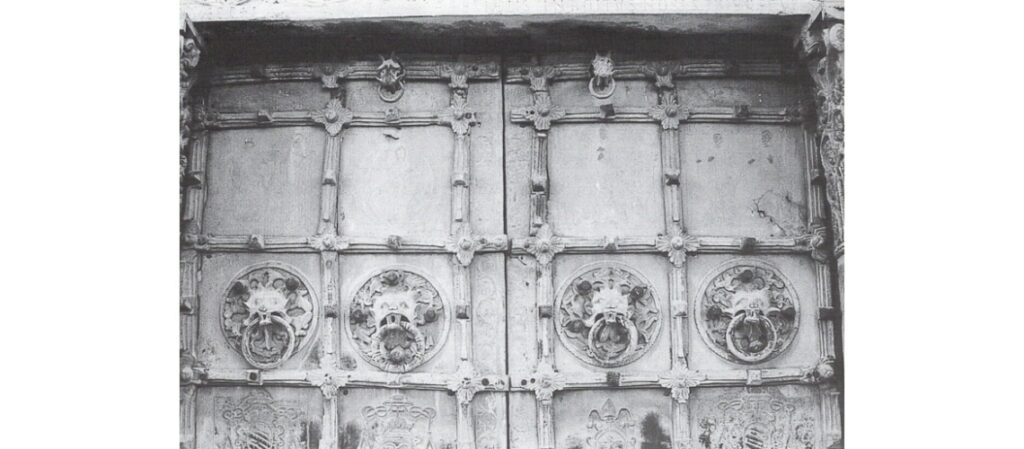
7
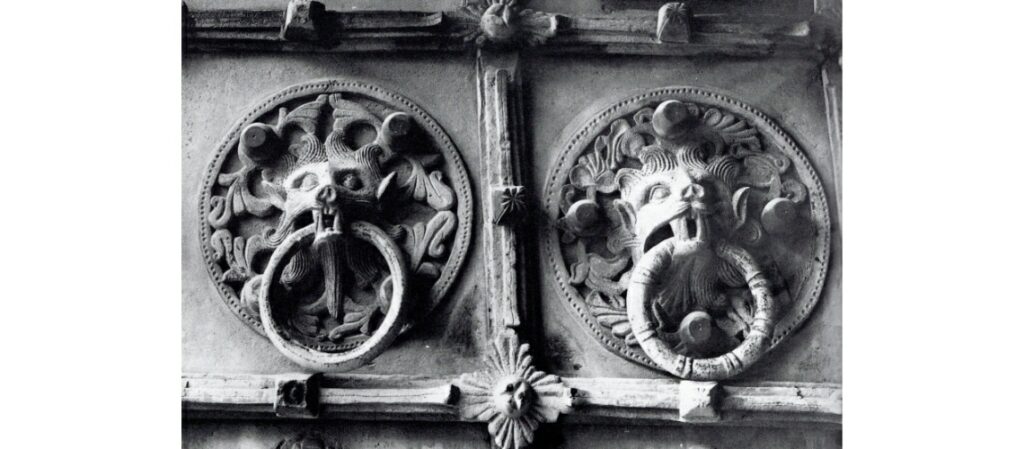
8
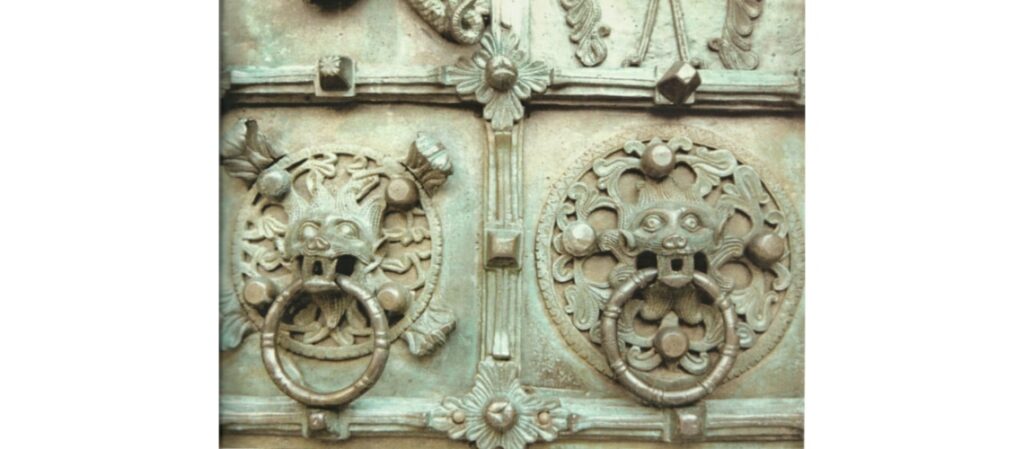
9
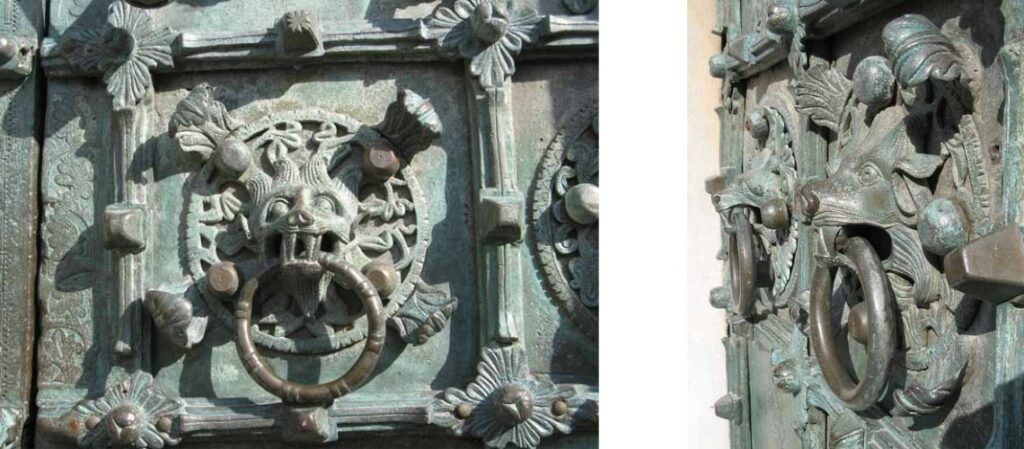
|
10 |
11 |
12
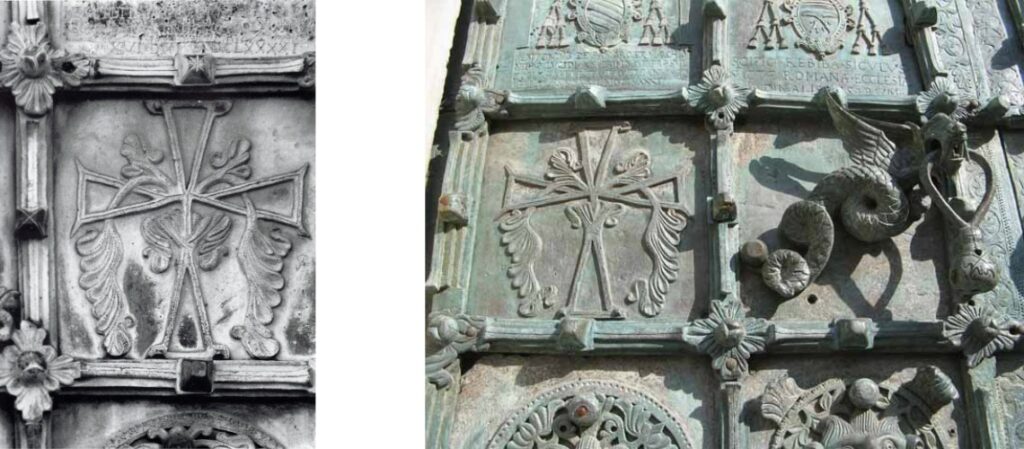
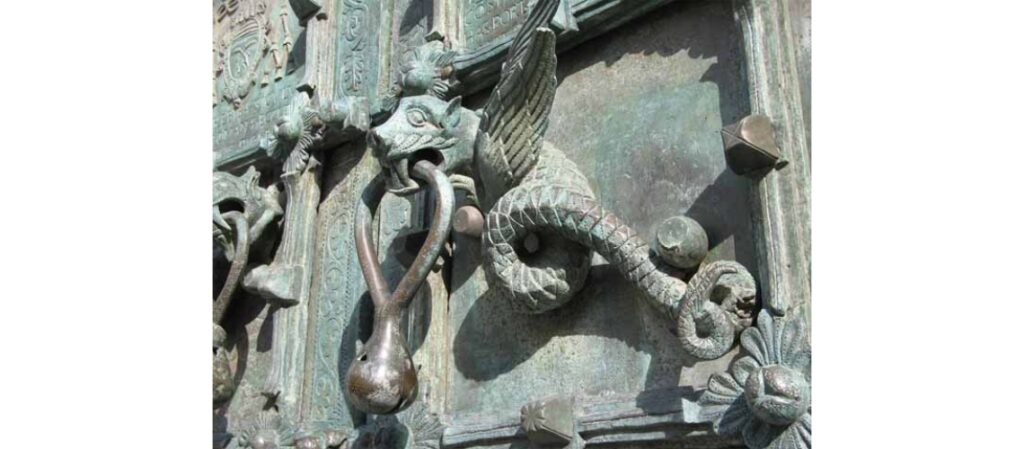
In the central register, two foliate crosses, slightly raised from the background, flank two high-relief dragons holding door knockers, also cast using the lost-wax process. The differences in each of these (including the foliate crosses) point to the direct casting of the sculptures, modeled directly in wax. [Photos 13, 14, 15]
|
13 |
14 |
15
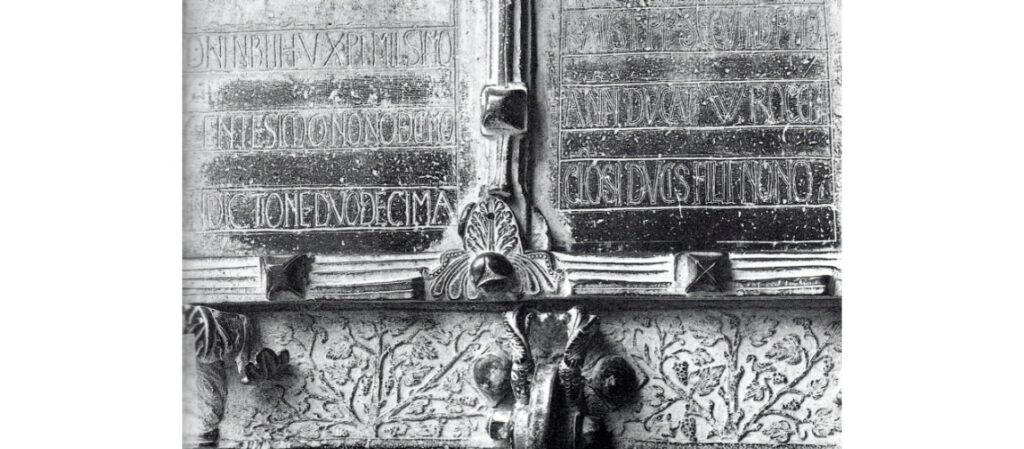
The panels of the lowest register contain a long inscription in capital letters in the centre of two parallel grooves (the last plate was replaced in 1573 with the inscription included in square brackets [Photo 16]):
AN(N)O AB INCARNATIO(N)E / D(OMI)NI N(OST)RI IE(S)U CHR(IST)I MIL(LE)SIMO / CENTESIMO NONO DECIMO / INDICTIONE DUODECIMA // ANNO PONTIFICAT(US) D(OMI)NI / KALISTI P(A)P(E) SECUNDI P(RI)MO / ANN(O) DUCAT(US) W(ILLELMI) ROGERII / GLO(RIO)SI DUCIS FILII NONO // WILLELMUS SECUND(US) / HUI(US) TROIANE SEDIS EP(ISCOPU)S / EP(ISCO)PAT(US) SUI AN(N)O XII HAS / PORTAS FIERI FECIT // [ DE PROPRIO ECCL(ES)IAE / ERARIO. IPSAM QUOQ(UE) / FABRICA(M) A FU(N)DAME(N)TIS / FERE EREXIT. – / ET PROSPER EP(ISCOPU)S TROIAN(US) / ET P(AT)RIARCHA CO(N)STA(N)TINOP(OLITANU)S /HAS PORTA PENE / COLLAPSAM INSTAURAVIT / M . D . L. XXIII ]
16
THE MINOR GATE
Nel 1127 lo stesso vescovo Guglielmo ordinava a Oderisio da Benevento due valve di bronzo per chiudere la porta minore destra della stessa chiesa, semplificata e di dimensioni minori rispetto alla prima. Anche in questa, nelle incisioni, nessun residuo della tradizione bizantina.[Foto 17,18]
|
17 |
18 |
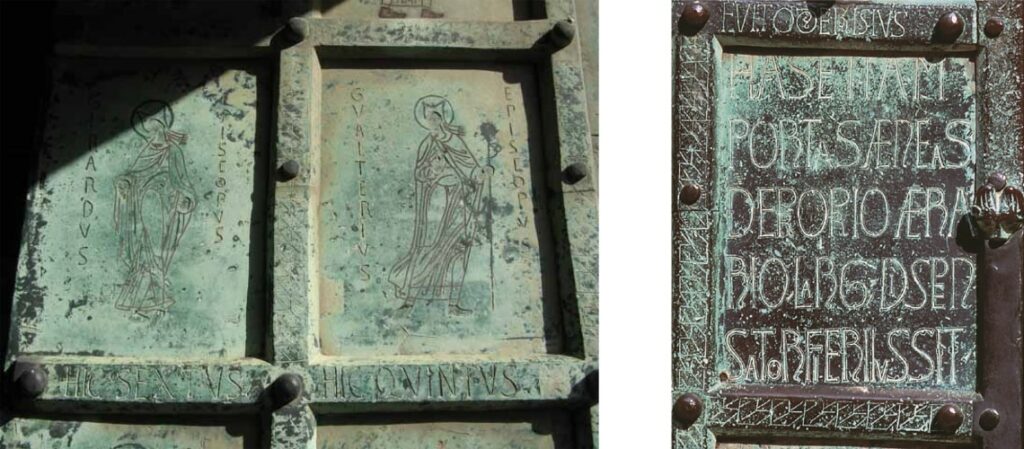
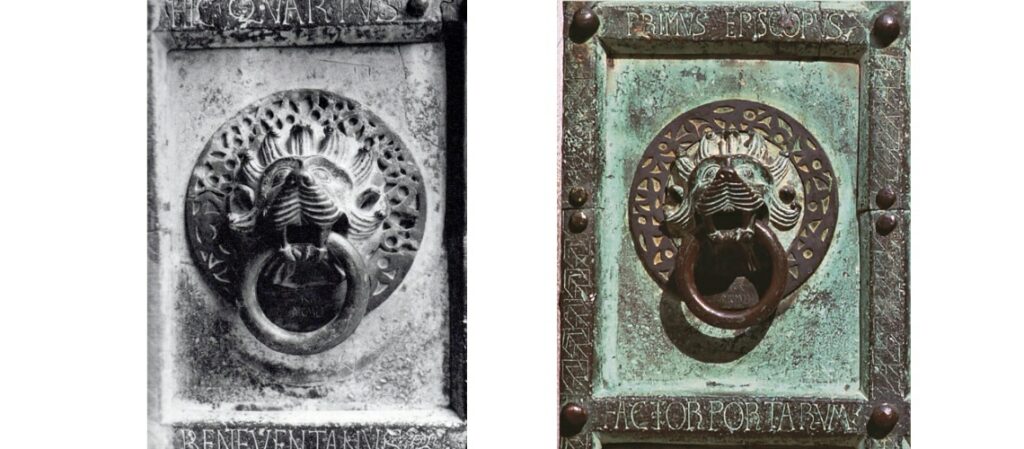
The 24 panels are held in place by smooth or lightly engraved frames with geometric motifs and inscriptions. They are all covered with engravings except for the four in the intermediate register which house four lion heads holding rings on perforated discs. [Photos 19,20,21,22]
|
19 |
20 |
|
21 |
22 |
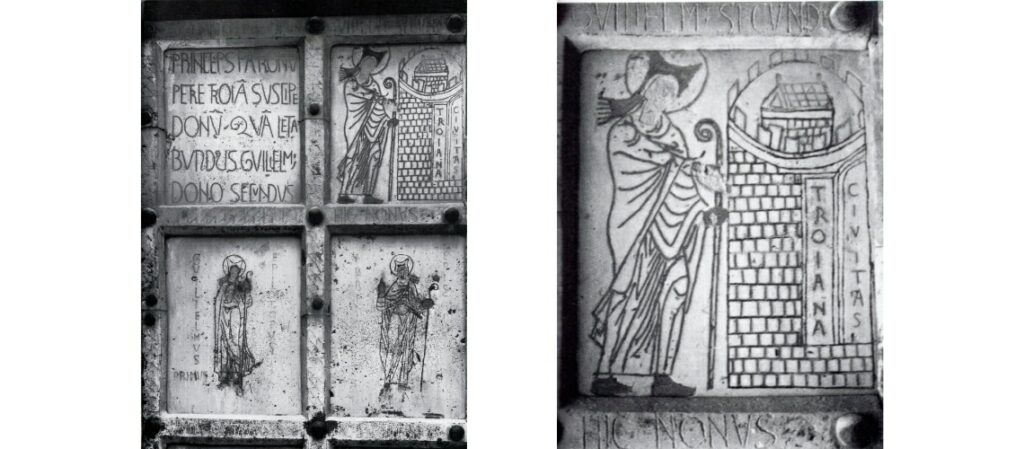
In the first upper register, the left panel bears the engraved inscription
PRINCEPS PATRONU(M) /PETRE TROIA(M) SIUSCIPE / DONU(M) QUA(M) LETA / BUNDUS GUILIELM(US) / DONO SECUNDUS
In the other panels of the same register, Bishop William is engraved next to the TROIANA CIVITAS, St. Peter and St. Paul. [Photos 23,24]
|
23 |
24 |
In the second and third registers the bronze panels have engraved the eight figures of the Trojan bishops preceding William, with halo, crosier, two-horned mitres as were used in the 11th-12th century: Oriano, Angelo, Giovanni, Stefano, Gualtieri, Girardo, Uberto, William I.[Photo 25]
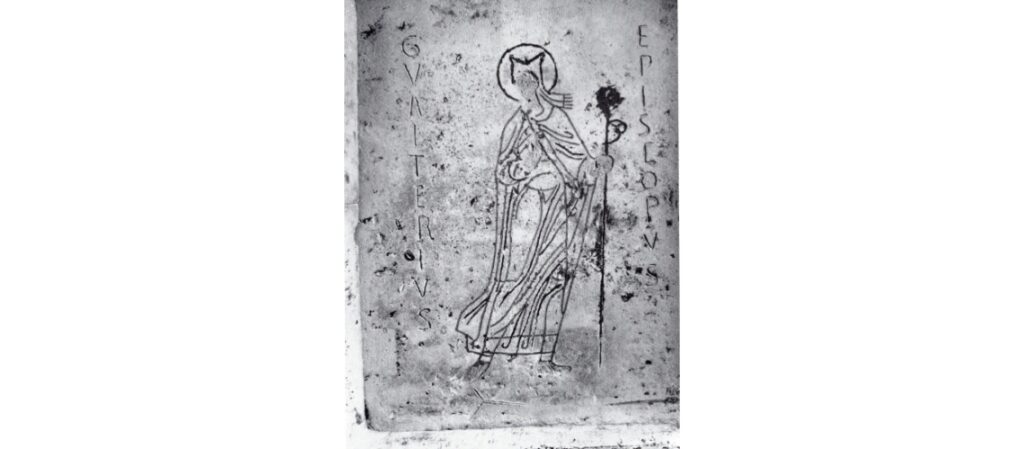
25
The panels of the two lowest registers feature a long engraved inscription in which the date 1127 appears. In the frame holding the panels under those with the lion heads, Oderisio’s signature:
FACTOR PORTARUM FUIT ODERISIUS HARUM BENEVENTANUS
[Foto 26]
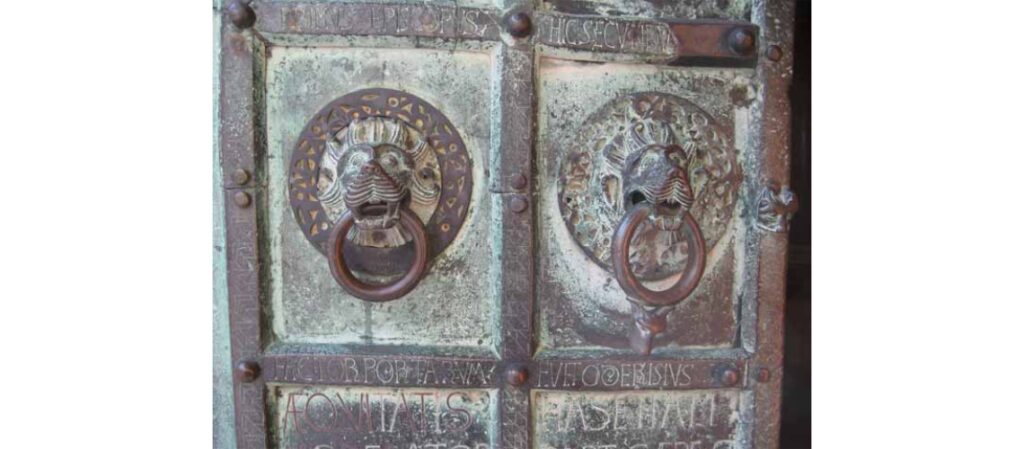
26