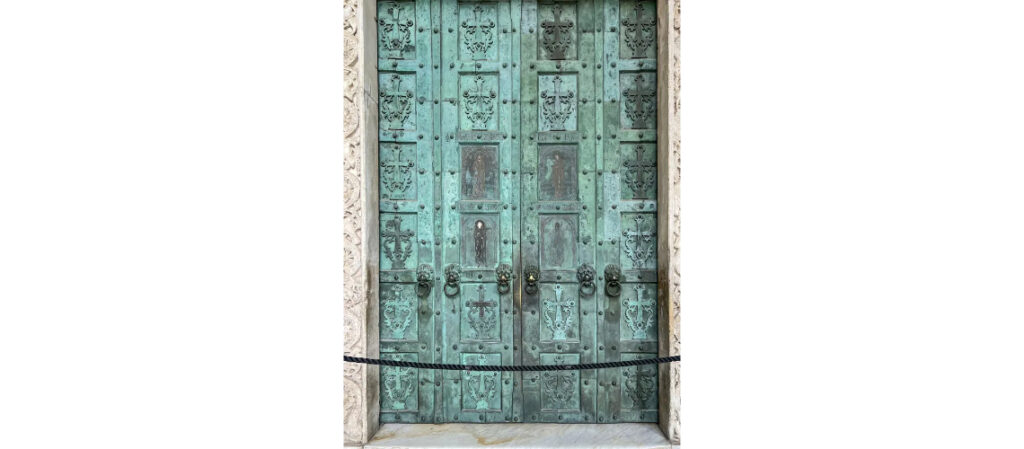
The bronze Door of Hildesheim
Rudolph the Glaber, a Cluniac monk, wrote around 1020 in his “Chronicles of the Year One Thousand” (Historiarum libri quinque):
“It was already almost the third year after the year 1000 when throughout the world, but especially in Italy and Gaul, a renewal of basilica churches took place: although many were well-maintained and had no need of it, nevertheless every Christian people vied with one another to have a more beautiful one. It seemed as if the earth itself, as if shaking off and freeing itself from old age, was being entirely clothed in a white mantle of churches. At that time, the faithful replaced with better buildings almost all the churches of the episcopal sees, all the monasteries dedicated to the various saints, and even the smallest country oratories.”
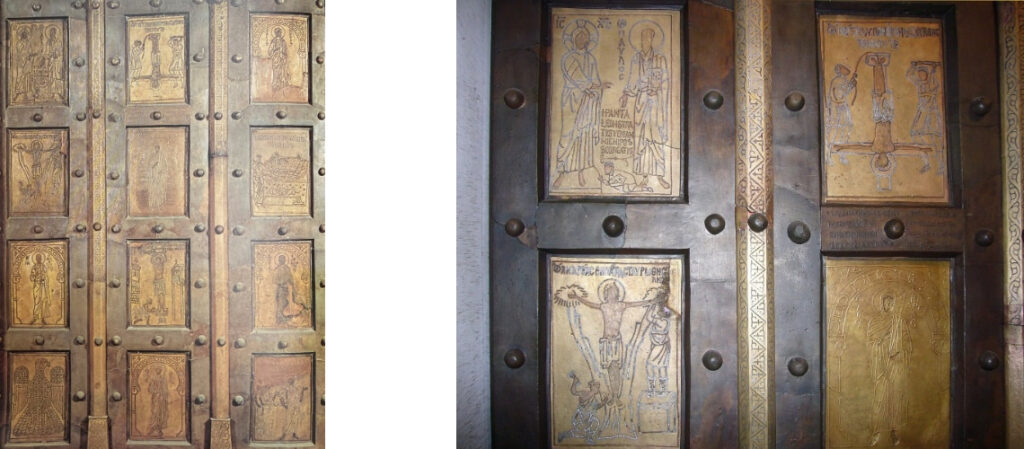
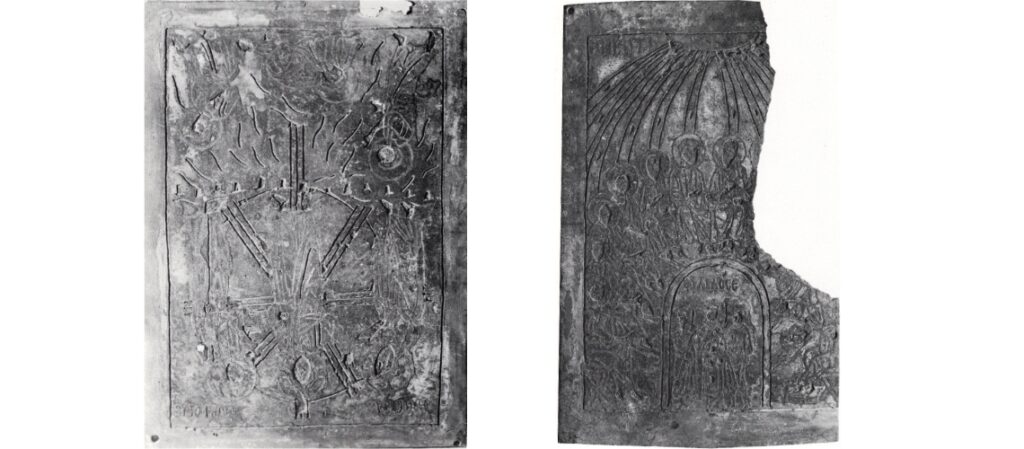
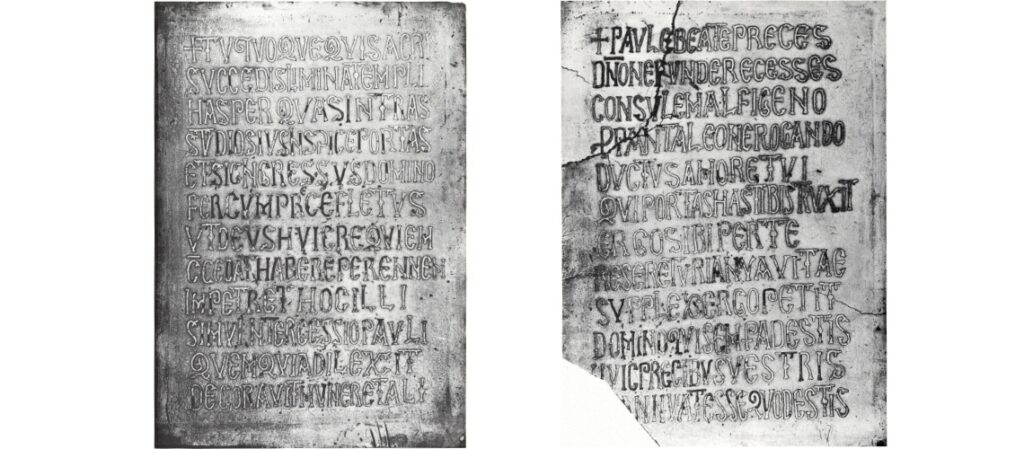
The style, which originated in the West, in which these churches were built was what the French archaeologist Charles de Gerville defined in 1818 as “Romanesque” (Romàn), characterized by the thick walls, the use of arches, and the dim interiors due to the small windows. Even the creation of the bronze doors, compared to Byzantine ones, followed a different decorative technique, no longer graphic but sculptural.
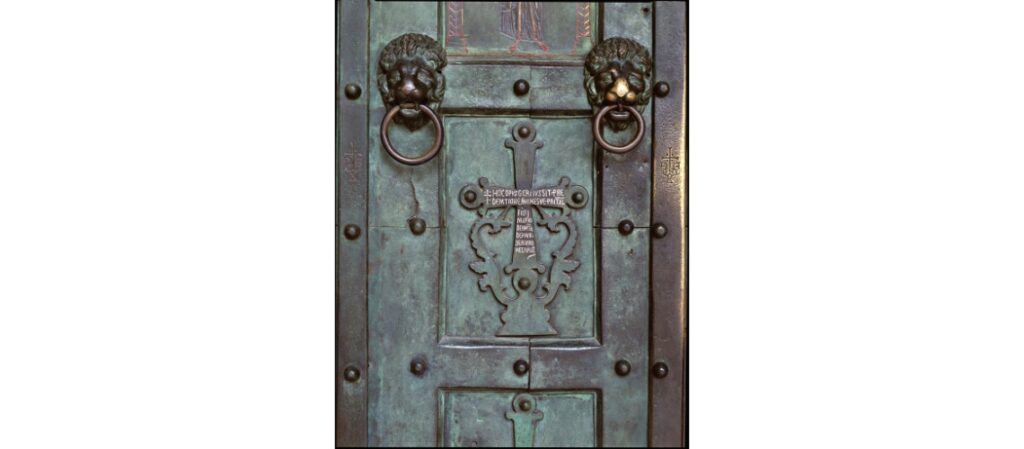
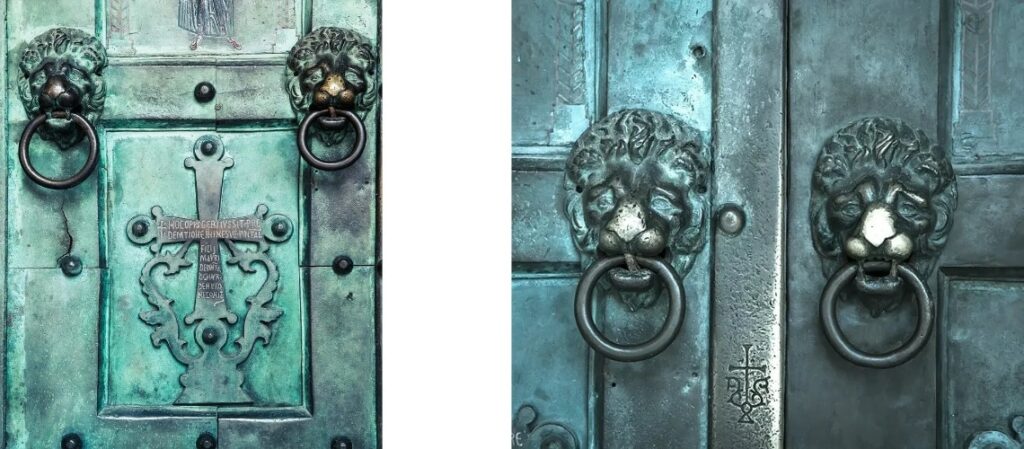
One of the first Romanesque examples of a bronze door with sculptures is the one (still in Ottonian style) of the Cathedral of Hildesheim in Germany, commissioned by Bishop Bernald (Bernwardstur) and executed around 1015, the year in which the two medieval lion heads holding the rings that act as handles were cast, as can be deduced from the inscription:
AN[NO] DOM[INICE] INC[ARNATIONIS] M XV B[ERNVARDVS] EP[ISCOPVS] DIVE MEM[ORIE] HAS VALVAS FVSILES IN FACIE[M] ANGELICI TE[M]PLI OB MONIM[EN]T[VM] SVI FEC[IT] SVSPENDI
(In the year of our Lord 1015, Bishop Bernhard – God bless his memory – had these cast doors hung on the facade of the Temple of the Angels in his memory.)
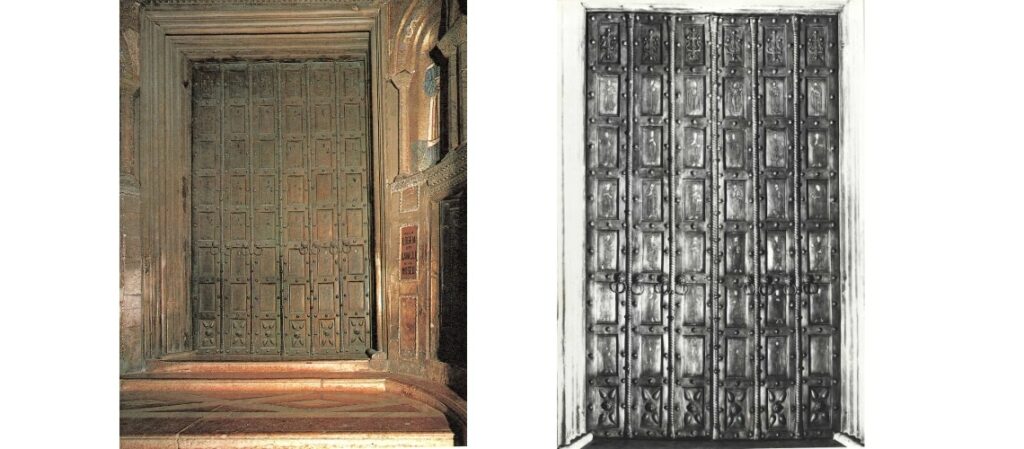
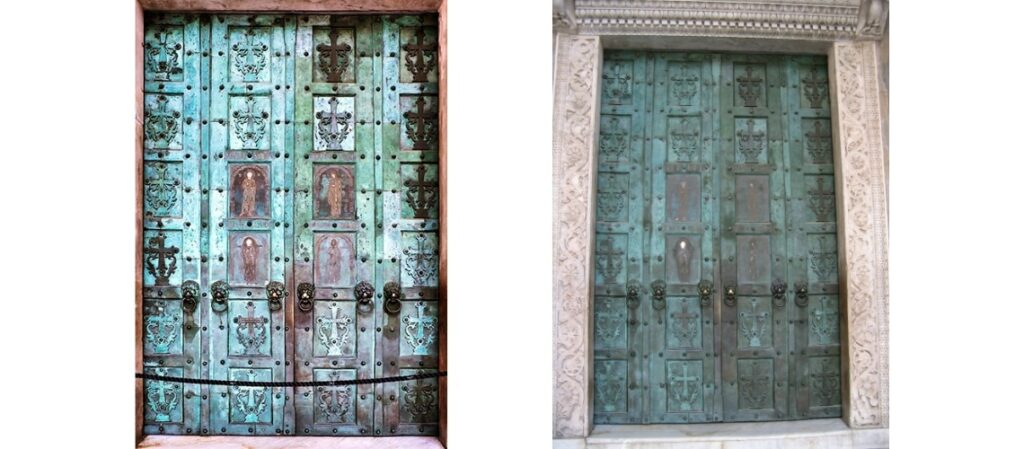
The door is 4.72 m high, but the panels have different widths: the left one measures 1.25 m, the right one 1.14 m, for a total width of 2.39 m. The average thickness of 4 cm allows the bronze door to be self-supporting without the need for a wooden frame. The casting technique is the classic lost-wax method.
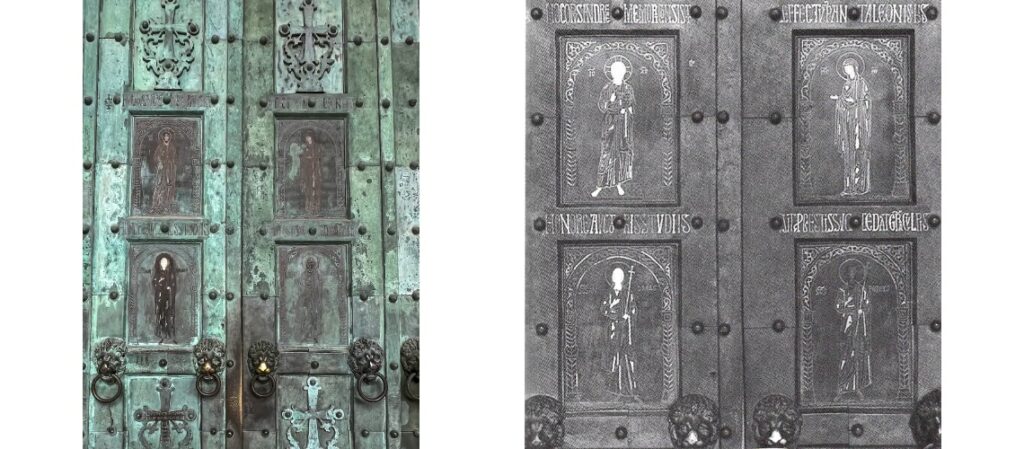
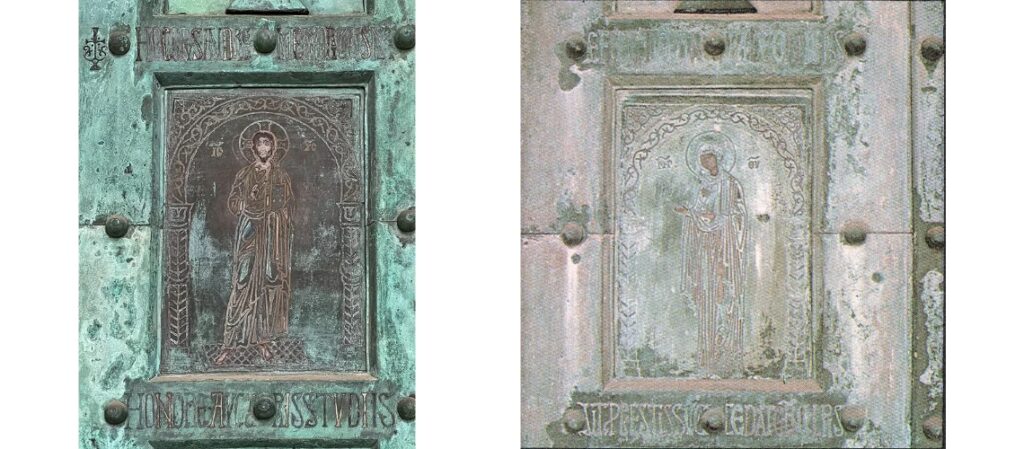
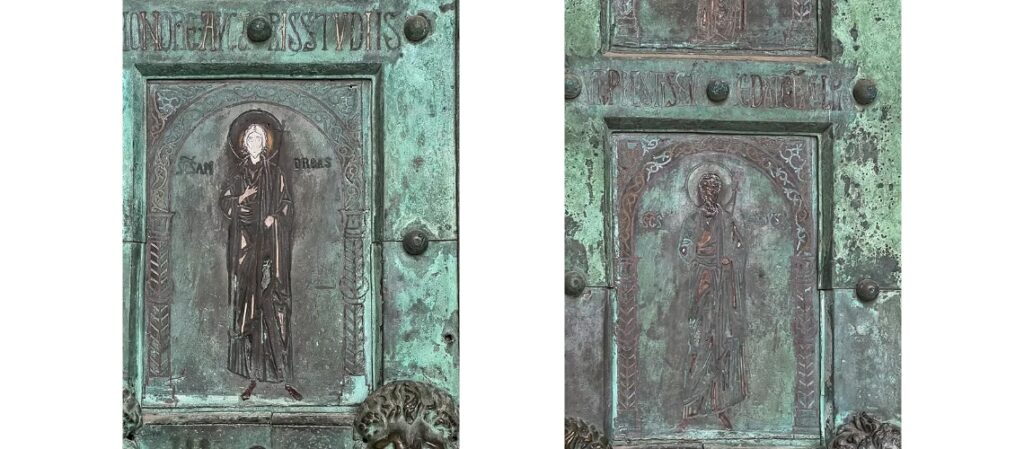
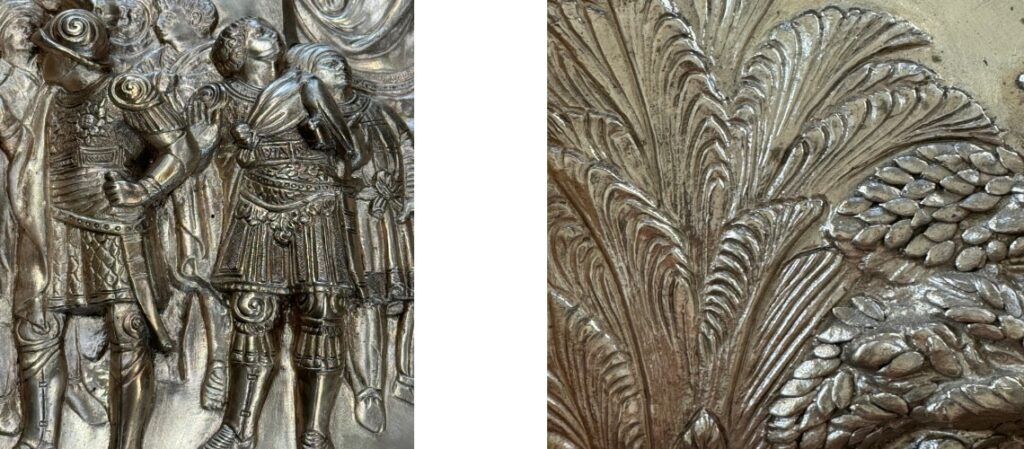
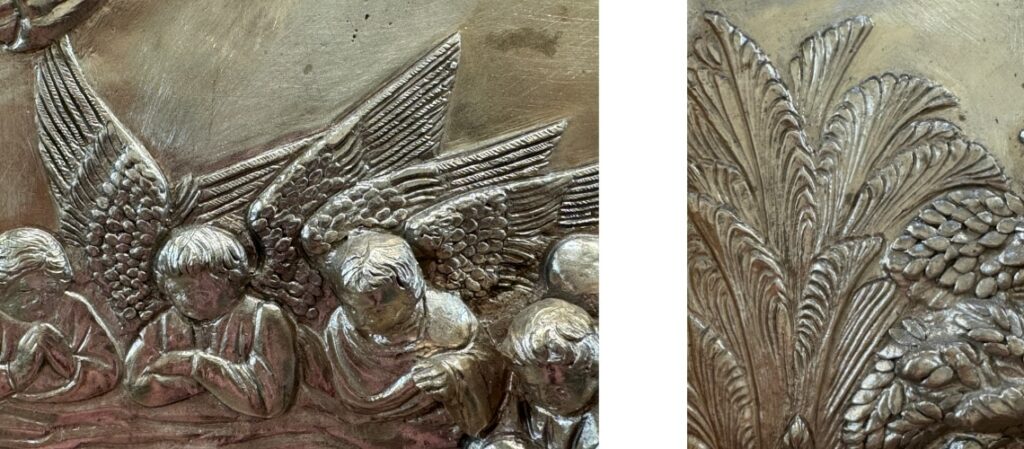
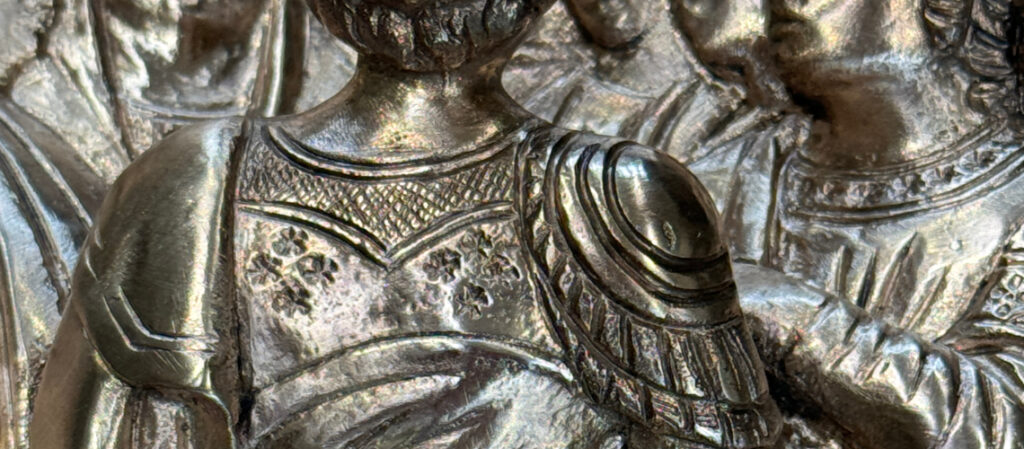
Each of the eight horizontal bands on both panels features figures from the Bible and the Gospels in low and high relief. The very low reliefs of the backgrounds are particularly interesting; while they fail to create any perspective or depth, they “anticipate” the Donatello schiacciato that would appear four centuries later.
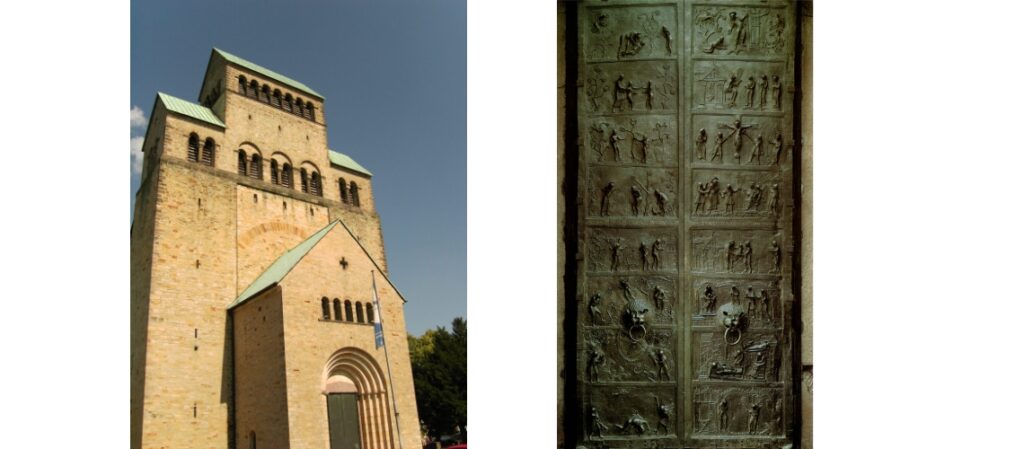
| Hildesheim Cathedral, facade with the Westwork | Hildesheim Cathedral, the bronze door |
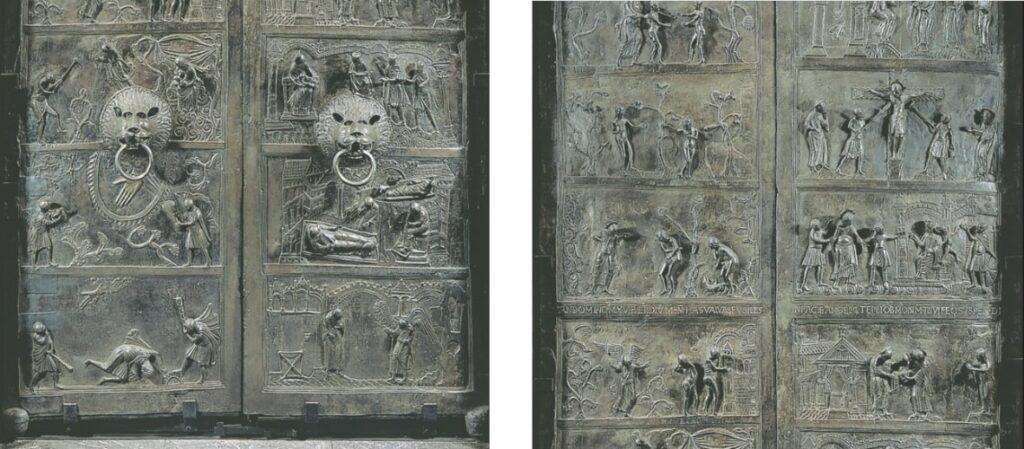
| Hildesheim Cathedral, the bronze door, detail of the lower part | Hildesheim Cathedral, the bronze door, detail of the central part |
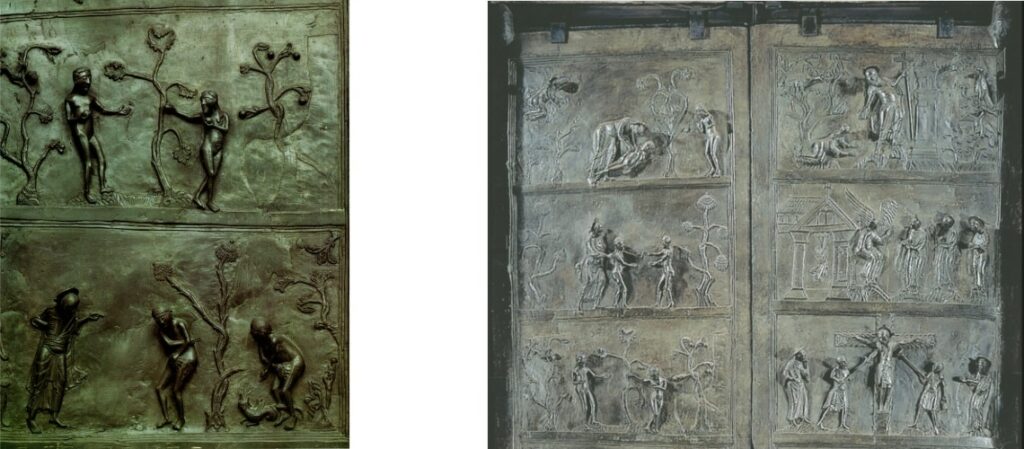
| Duomo di Hildesheim , la porta bronzea, dettaglio | Duomo di Hildesheim Hildesheim, la porta bronzea, dettaglio della parte alta |
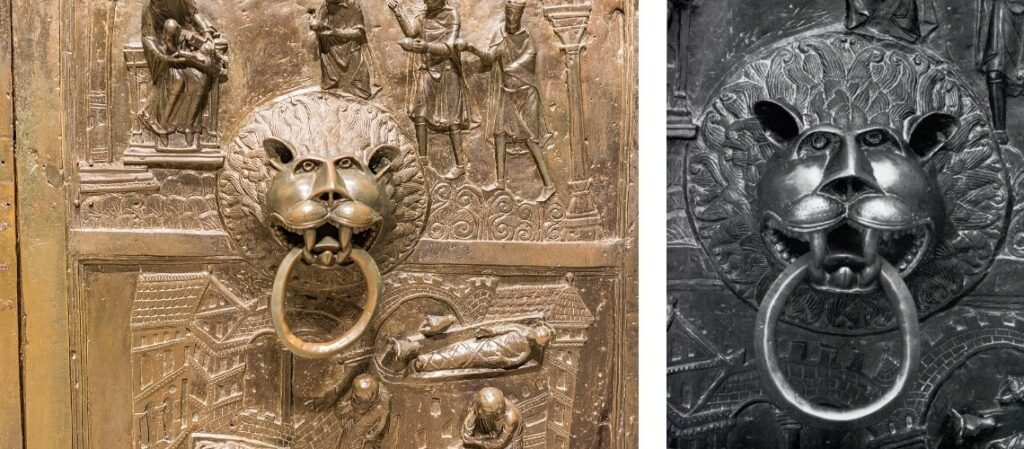
| Hildesheim Cathedral, the bronze door, detail | Hildesheim Cathedral, the bronze door, ring-holding lion |
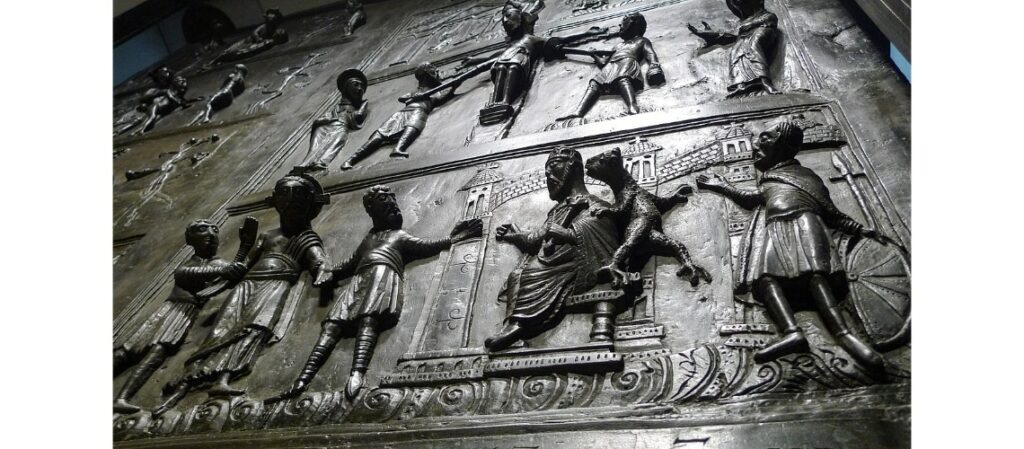
Hildesheim Cathedral, the bronze door, detail
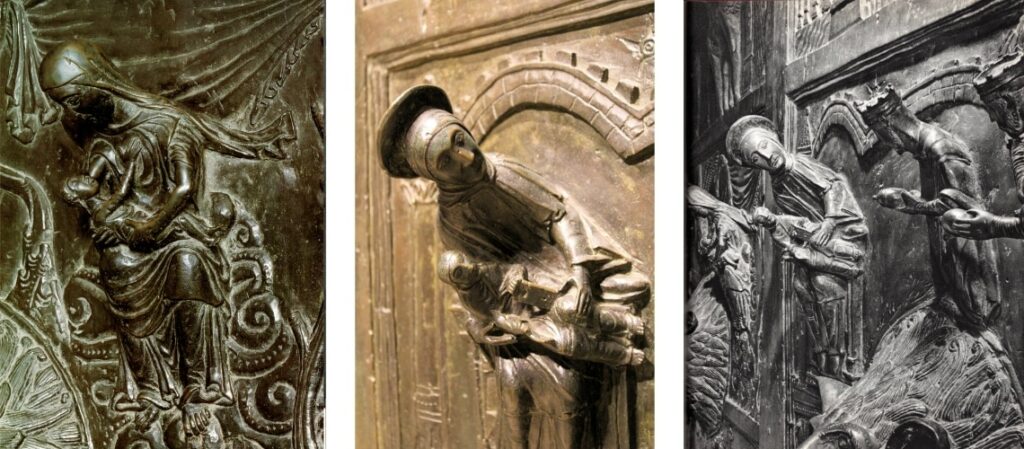
Hildesheim Cathedral, the bronze door, details
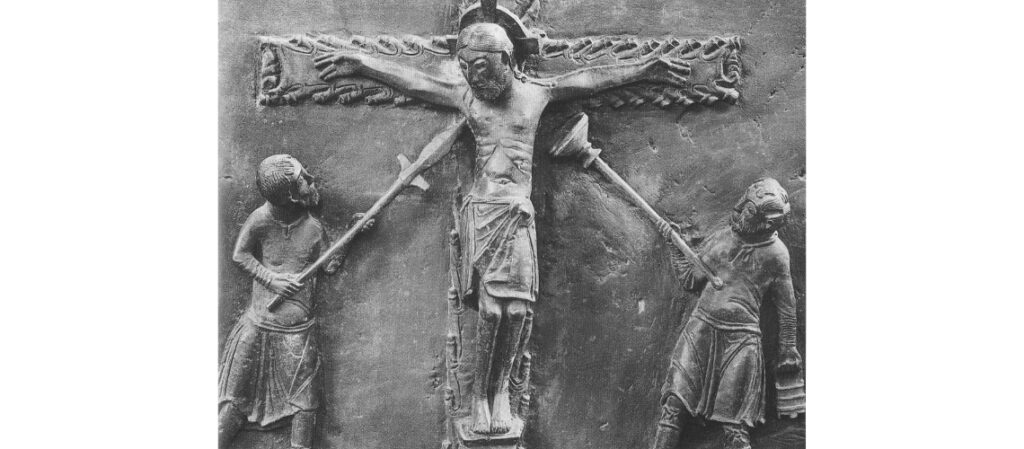
Hildesheim Cathedral, the bronze door, detail